How to plan a trip with your period in mind
Check your expected period while you are comparing travel dates, if that information is useful to you. It can help you choose between two weekends or decide how much of the itinerary to book in advance. You may also decide to keep your original plan.

The moment to check is easy to miss. You have the calendar open, a friend is waiting for an answer, and the train fare looks reasonable. The period estimate is in another app. By the time you remember to compare them, you may have paid for the trip.
Kiyo brings optional cycle context into Monthly, where you can see the estimate beside your plans. It appears as a color layer behind the dates, rather than another event. You choose whether to set up the feature and provide the required consent. The estimate does not confirm a future start date or predict how you will feel.
Compare the weekends you could actually book
Consider this hypothetical city break. You and a friend can travel on either November 7 to 8 or November 14 to 15. The first weekend falls near your expected period. The second has cheaper accommodation, but your friend would need to move a shift and you have an early meeting on Monday.
Put the candidate dates beside the other commitments in Monthly. If the beginning of your period is usually a time when you want more space, the second weekend may appeal. Check the practical conditions too: can your friend move the shift, and will the return journey work before Monday’s meeting?
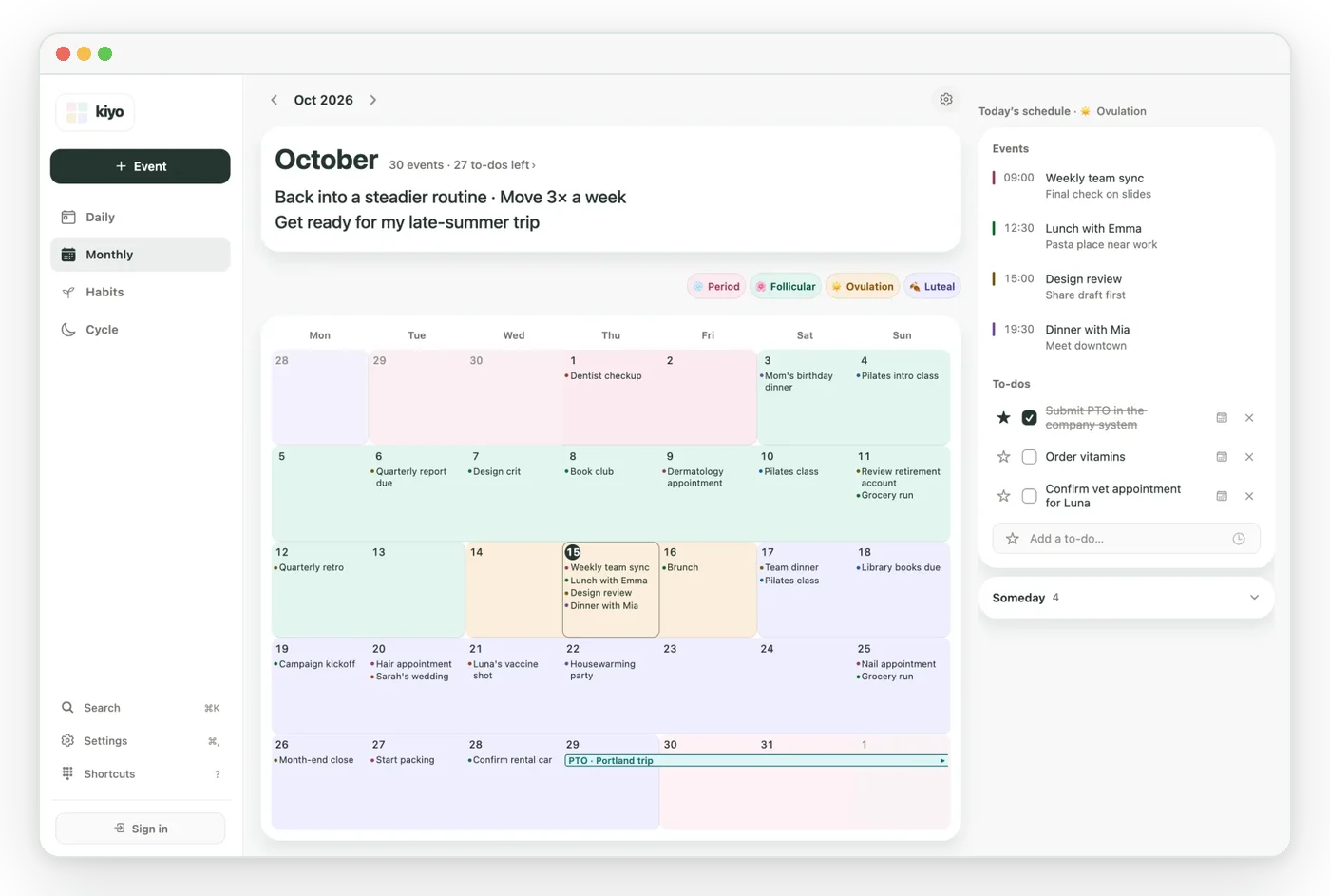
You might choose the first weekend instead, keeping the train and hotel while leaving Saturday afternoon unbooked. Or keep the full itinerary if that is what you want. There is no required adjustment after looking at the estimate.
As you compare trip dates, use the trip calculator to check whether the dates you’re considering overlap your estimated period.
If the dates are fixed, look at the itinerary
A trip may be tied to someone else’s leave or an event you cannot move. In that case, consider which parts still have room to change. A booked theatre performance has a fixed start; a gallery visit or a walk can often wait until you know what you feel like doing.
You could keep an evening free, choose one long outing instead of booking two, or leave the morning after arrival unplanned. Discuss the pace you would like with your companion. You do not owe anyone an explanation of your cycle to ask for a later start.
Keeping everything as booked is equally reasonable. Some people prefer not to consider period timing when travelling at all. The useful choice depends on your own experience and the trip in front of you.
An estimate cannot guarantee a period-free holiday
Expected dates can shift. That makes them unsuitable as a promise about a holiday several months away, and moving the booking does not guarantee your period will fall elsewhere.
Before paying a change fee, weigh the estimate with the costs and commitments you already know. You may decide that keeping the booking and preparing what you need is preferable. Kiyo’s approach to cycle context lets you make that judgment with the information beside your calendar.
Give departure a date and preparation its own list
Once you have booked, create a departure event and turn on its Countdown indicator. Then enter preparation to-dos separately, giving them dates that fit around your ordinary week.

For example, confirm the station transfer a week before leaving, check the reservation two days before, and pack your charger the evening before departure. Add your usual period supplies if you want them with you. You create these tasks yourself; the departure event does not generate or automatically link a packing list.
Monthly keeps the trip date in view. Daily brings that day’s preparation to-dos alongside your other commitments, so you can mark what you finish. The event tells you when you leave; the checklist tells you what remains to do.