What to plan when your period might fall on an important day
You can prepare for a possible overlap without knowing exactly when your period will arrive. Keep the important date in view, then look at the work and commitments around it. There may be a rehearsal you can do earlier, an errand that can wait, or an evening you would rather leave open.
This can be useful for an exam, an interview or a wedding as well as a presentation. The amount you change depends on your experience. If the start of your period often makes a long day out less comfortable, you may want some room around it. If it usually makes little difference, keeping your existing arrangements is a reasonable choice.
Start with the date you have already agreed
Consider a fictional November. You have a presentation booked for November 19 at 10 a.m. Your period looks likely to arrive around then. Because the start date can change, you look at the surrounding commitments from November 17 through 21, too.
The presentation stays on the 19th. Other people have booked their time, and the room is reserved. Preparing your speaker notes and collecting a parcel are different: you can choose when to do them.
After checking other deadlines, you find time on November 7 to put together a draft. You agree on comments by the 11th and check that the 14th has room for a rehearsal.
You collect the parcel on the 15th instead of squeezing it into the journey home on the 18th. A cupboard clear-out you had loosely intended for the 20th moves to the 24th. Neither errand belongs to a particular cycle phase; these are simply jobs with flexible dates.
If you know from experience that you prefer fewer outings when your period starts, you might leave the evening of the 18th free. For the presentation morning, check the venue entrance and arrival time beforehand, and pack the period products you normally use. A little extra time for the journey may be more useful to you than another late rehearsal.
You can decide closer to the day whether to accept an invitation for the next evening.
Suppose your period actually arrives on the 12th, or after the presentation. You still have a reviewed draft, a collected parcel and a clear idea of where to go. The cupboard can wait until the date you chose. You can also bring it forward again if that suits you. The draft and travel checks are needed for the presentation in any case.
Use the countdown to choose your own preparation dates
Kiyo is a planner that shows estimated cycle phases beside events, to-dos and habits. In Monthly, your presentation belongs as an event. You can turn on its Countdown to see how long remains, then choose preparation to-dos separately in Daily.
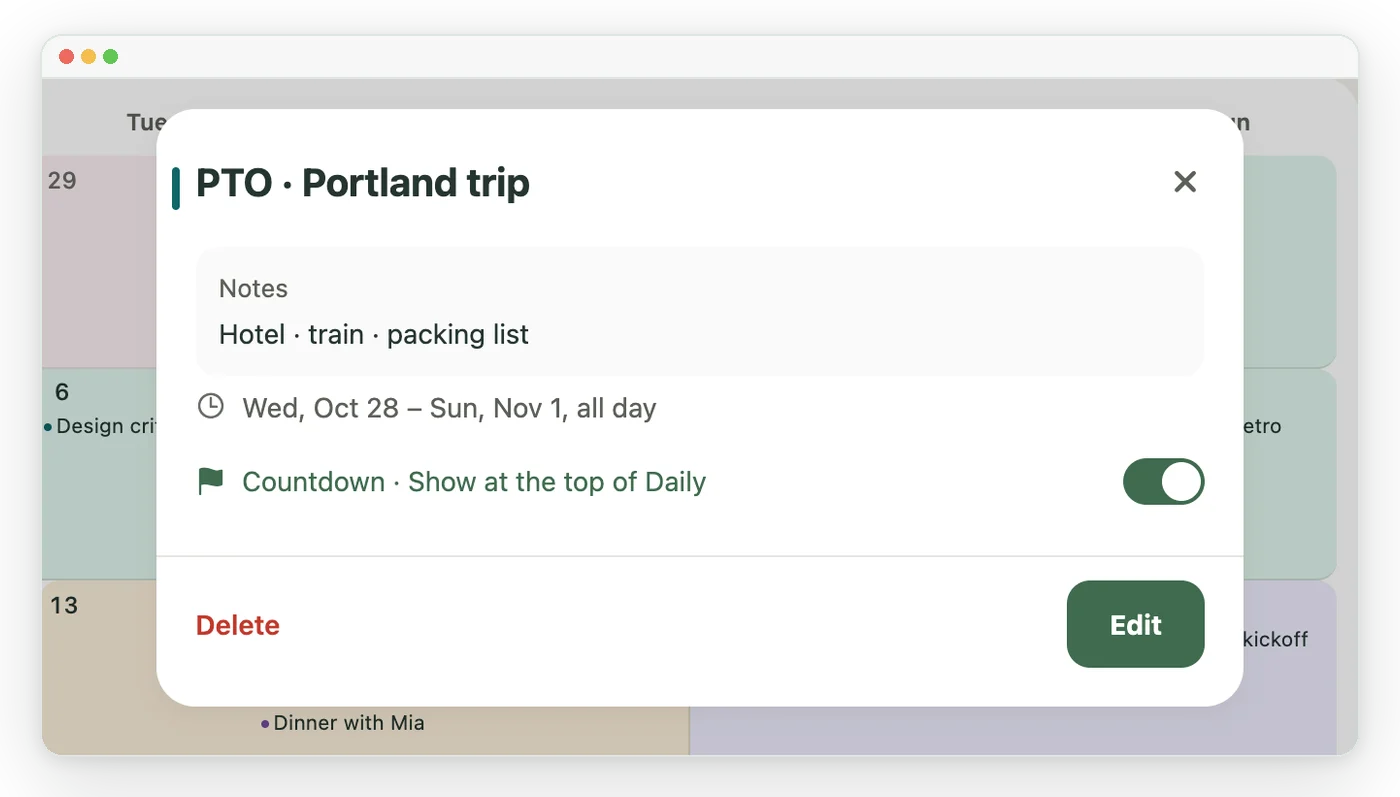
For example, add “rehearse with speaker notes” to the day you have chosen. Turning on the countdown does not create that task or move its date.
The optional cycle feature is off by default and requires separate consent when you enable it. Once set up, its soft estimated color layer appears beside events in Monthly. You can consider the possible overlap while looking at your plans, instead of switching to another app and trying to hold the dates in your head.
That layer does not tell you how you will feel on presentation morning. It gives you timing context to weigh alongside your own experience and the practical demands of the event.
Keep room to change your mind
A plan made weeks ahead can change as you learn more. You may finish the draft early, receive late feedback, or decide that you want company after the presentation. If an arrangement involves someone else, agree on its flexibility beforehand. You can suggest another dinner date without explaining your cycle.

For more on uncertainty, read how to plan with a period estimate. If the days beforehand are usually your concern, see planning the week before your period. An event away from home may also call for the practical arrangements in planning a trip with your period in mind.