Habit tracker or recurring event? How to choose
Use a recurring event to reserve a time that repeats. Use a habit when you want a record of the days you practise. Both can be useful for one activity, provided each entry has a purpose you can explain.

A conversation group at seven on Wednesday needs a place in your calendar. Ten minutes with your vocabulary notebook may need something different. You might want to see whether you returned to it during the week, without creating a month of identical appointments.
The choice becomes clearer when you think about the question you will ask later. “When am I meeting the group?” needs a time. “Which days did I practise?” needs a record of what you marked as done.
A conversation group and practice at home
In this hypothetical example, you join a weekly language conversation group on Wednesday evenings. Add it as a recurring event so you can plan around its start time. If you need to renew your membership, keep that as a to-do you can finish.
For independent practice, you choose Monday, Thursday and Saturday. Create a habit for those weekdays and check it off when you practise. The habit preserves dated check-ins, so you can return to the record when planning another week.
You could also track attendance at the conversation group as a habit. The event would hold the appointment; the habit would hold your recorded attendance. Before adding both, decide whether you will use both pieces of information. If the extra check feels unnecessary, keep the group as an event and let the habit cover independent practice only.
A habit can have a time without becoming another appointment
Kiyo lets you give a habit a weekday schedule and, if useful, a time. A timed habit appears in Daily’s timeline alongside events and to-dos. Setting that time does not create a separate notification for the habit.
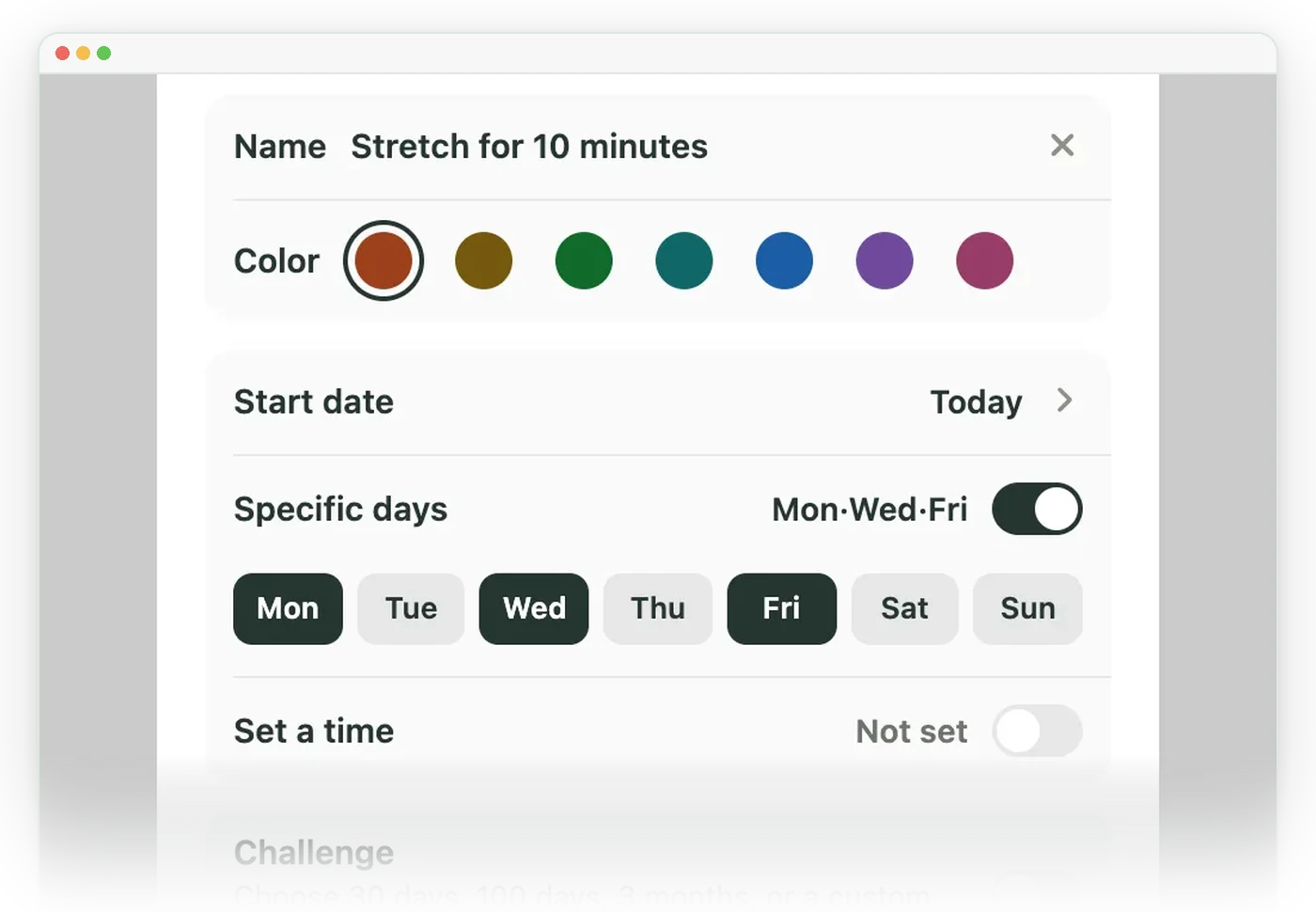
You can check it off in Daily while reviewing the rest of your day, or from the habit view. Either route updates the same record. You do not need to log the practice again to see it in your habit history.
Monthly keeps calendar events as entries, while habits retain their own schedules and records. Habit occurrences are not added as repeating events in Monthly. The Kiyo habit tracker page explains the schedule and history in more detail.
Read an empty day against the plan you made
If you selected Monday, Thursday and Saturday, Tuesday is a day off. It is different from a scheduled Thursday that you left unchecked. Dates before a habit starts or after it ends are outside its active period and are distinguished too.
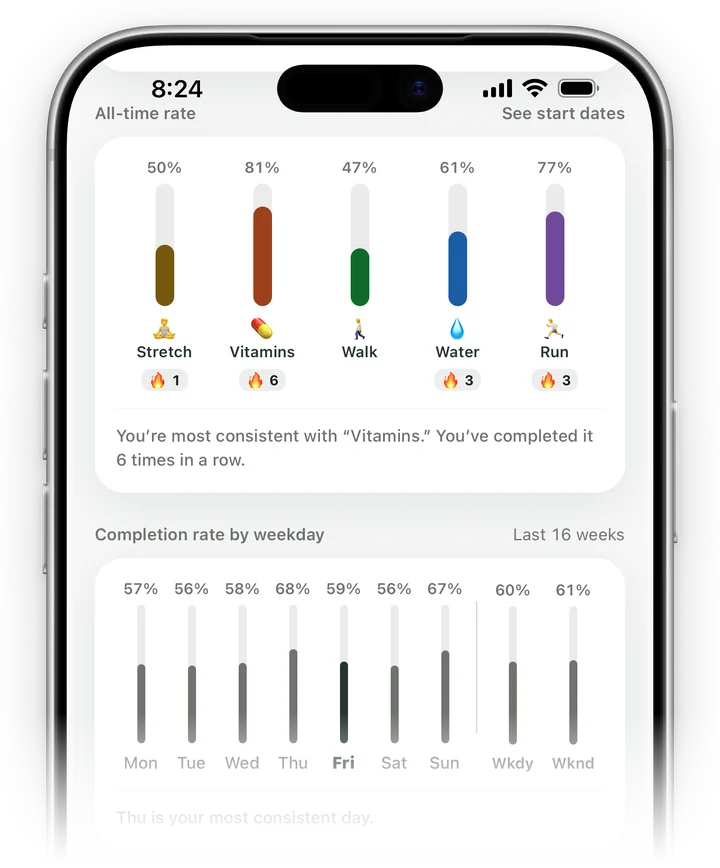
That matters when you look back. You planned three practice days, so the other weekdays do not need to be filled to make the record complete. If Thursdays keep going unchecked, you can consider choosing another day. You can also keep the schedule if a particular week was simply unusual.
A check-in is something you recorded. An empty square cannot tell you whether you skipped practice or forgot to log it, just as a past calendar event cannot confirm that you attended. Read the history with what you remember about the week.
Keep the calendar slot if reserving time helps
A recurring event can work well for independent practice too. If blocking out a particular evening is the part you need, there is no reason to replace a system that suits you. A habit becomes useful when you want to keep a separate record of returning to the activity.

For one-off actions around that activity, such as buying a workbook, a to-do may be enough. The guide to events, to-dos and habits explores that wider choice. You can use this structure with Kiyo’s cycle features switched off.