Events, to-dos or habits? How to plan a day that fits
One yoga class in the calendar. Somehow, a full day ahead.

There is a membership to renew, stretching you want to keep up with, and a cupboard you have been meaning to sort since last weekend. Those things still need attention even when the calendar looks spacious. A long checklist has its own blind spot: it tells you what is waiting, without showing how much of the day is already spoken for.
In Kiyo, events, to-dos and habits hold different information. Daily brings them together so you can decide how much to take on. To choose where something belongs, start with what you will want to know when you look at it again.
When do I need to be there?
A yoga class at 18:30 belongs in events because the booking has a time. You need to arrange the rest of the day around being there. Events can also be all-day, when the date itself is what you need to remember.
If the class happens every week, it can still be a recurring event. Repetition does not change the reason you put it in the calendar: you want to know when the class takes place.
The booking also cannot tell you whether you went. If you want a separate record of practising yoga over time, a habit may be useful alongside it. If remembering the class is enough, keep the event on its own. You get to decide whether another record would be useful.
What needs finishing?
Renewing your gym membership is a to-do. Once you have done it, you can mark it complete. The question you will return to is whether it still needs your attention.
A date does not turn that task into an appointment. Suppose your membership expires on Friday. Friday is the deadline for renewing it; Thursday lunchtime might be when you choose to do the work. Those dates have different meanings, even if you simply keep the deadline in mind when deciding which day to plan the task for.
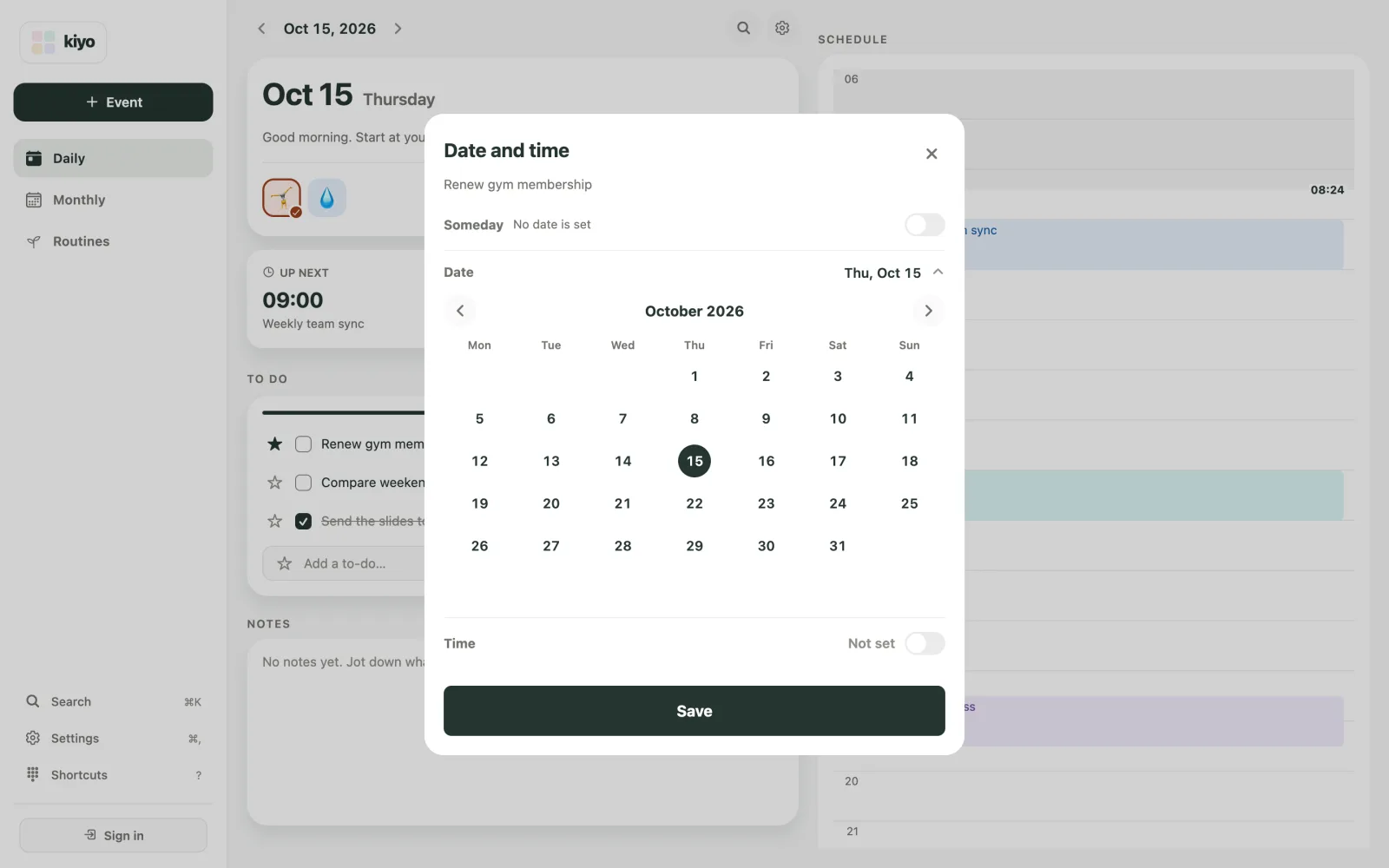
Kiyo’s to-dos have checkboxes, and you can star an important item. Something with no date can stay in Someday until you are ready to make room for it.
What do I want to keep doing?
Stretching on Tuesday, Thursday and Saturday is a habit because you want a record that continues beyond any one session. Choose days that suit your life, then check in when you practise. A habit does not have to happen every day to belong here.

The Habits screen keeps your scheduled days and check-in history, so you can look back at how you have kept going. Habits are not added to Monthly as a series of repeated calendar events. When a habit has a scheduled time, it can appear in that day’s Daily schedule. You make the check-in yourself; a planned session is still a plan until you record what you did.
Look at the whole Thursday before adding more
Imagine it is Thursday morning. You have yoga booked for 18:30. Your gym membership expires tomorrow, so you choose to renew it today. Stretch is scheduled for 07:00, and sorting the cupboard is also on your list.
Each item has a sensible home. Together, they ask more of Thursday than that single calendar entry suggested.
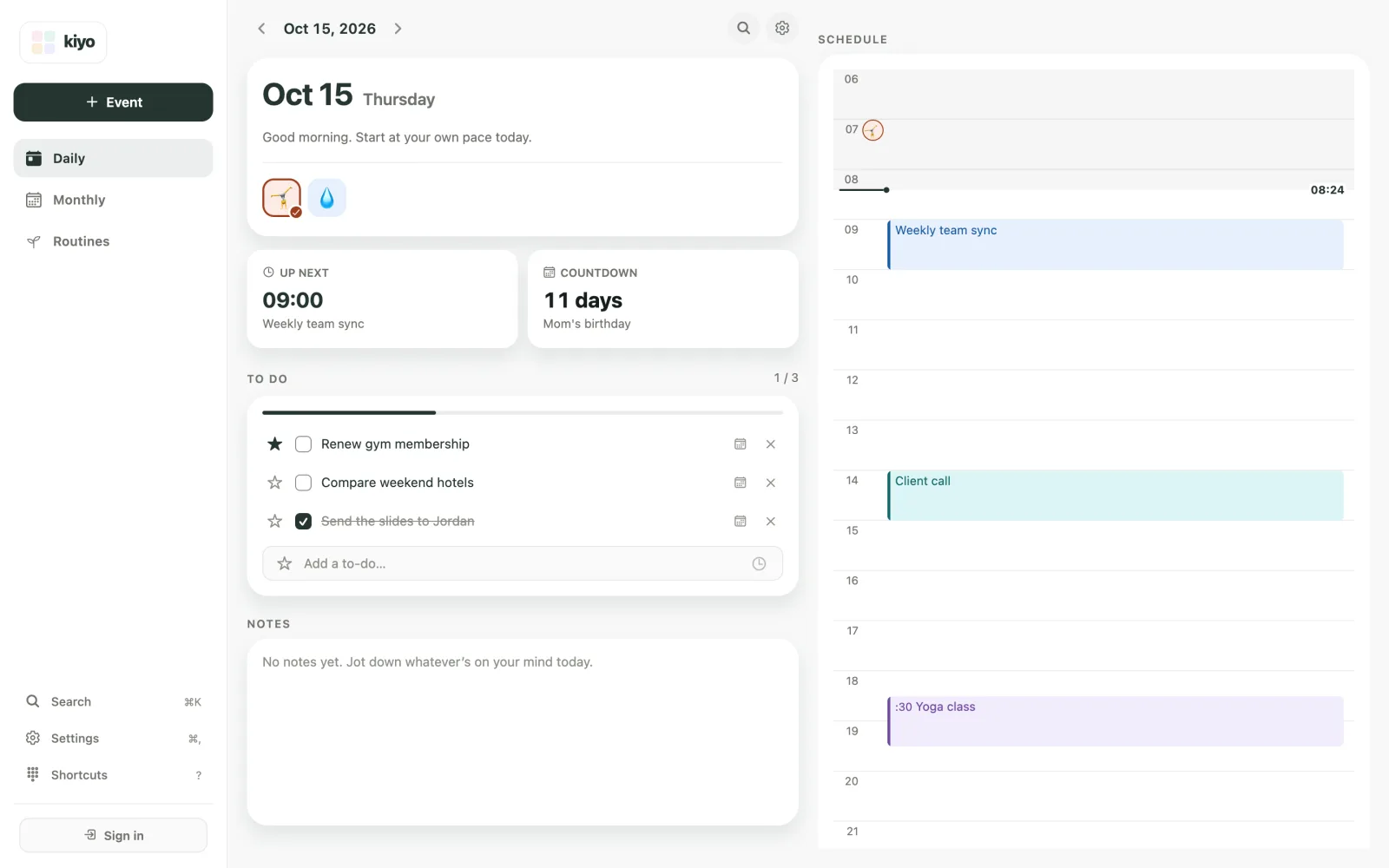
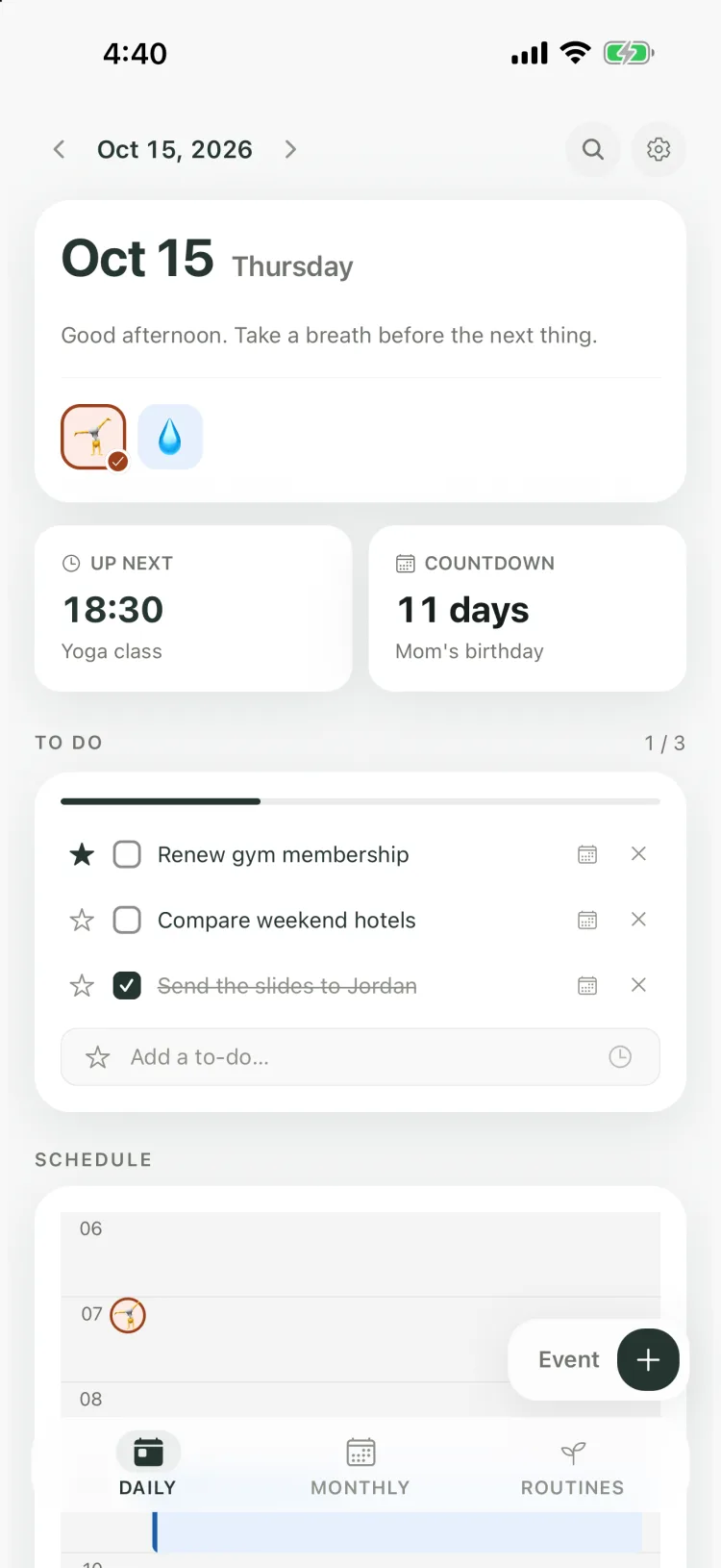
In Daily, you can weigh those plans against the rest of your workload, how you feel and how you want to spend the evening. Perhaps renewing the membership and getting to class are enough alongside your usual commitments. You choose to leave the cupboard for another day. That is a decision you make while looking at the whole day; Kiyo does not move the task for you.
Cycle tracking is off by default. If you choose to set it up with separate consent, Monthly can also show estimated cycle colors beside your plans. Those estimates cannot tell you how you will feel. Events, to-dos and habits all work with cycle tracking off.