How to keep a daily record without journaling every day
You can build a useful record from the planning you already do: keep your commitments in view, mark tasks and habits as completed, and add a note when you want to remember something those entries cannot explain. You don’t need to write a full account of the day each evening.

That may be enough if you want to remember ordinary weeks without starting another daily practice. A planner can hold the appointment you arranged and the task you finished. A sentence can preserve what you enjoyed, or why something had to wait.
Leave yourself the detail you’d otherwise lose
Take this hypothetical Tuesday. You have an evening photography class, a form to return and a photo order to place. Language practice is a habit you record on selected weekdays.
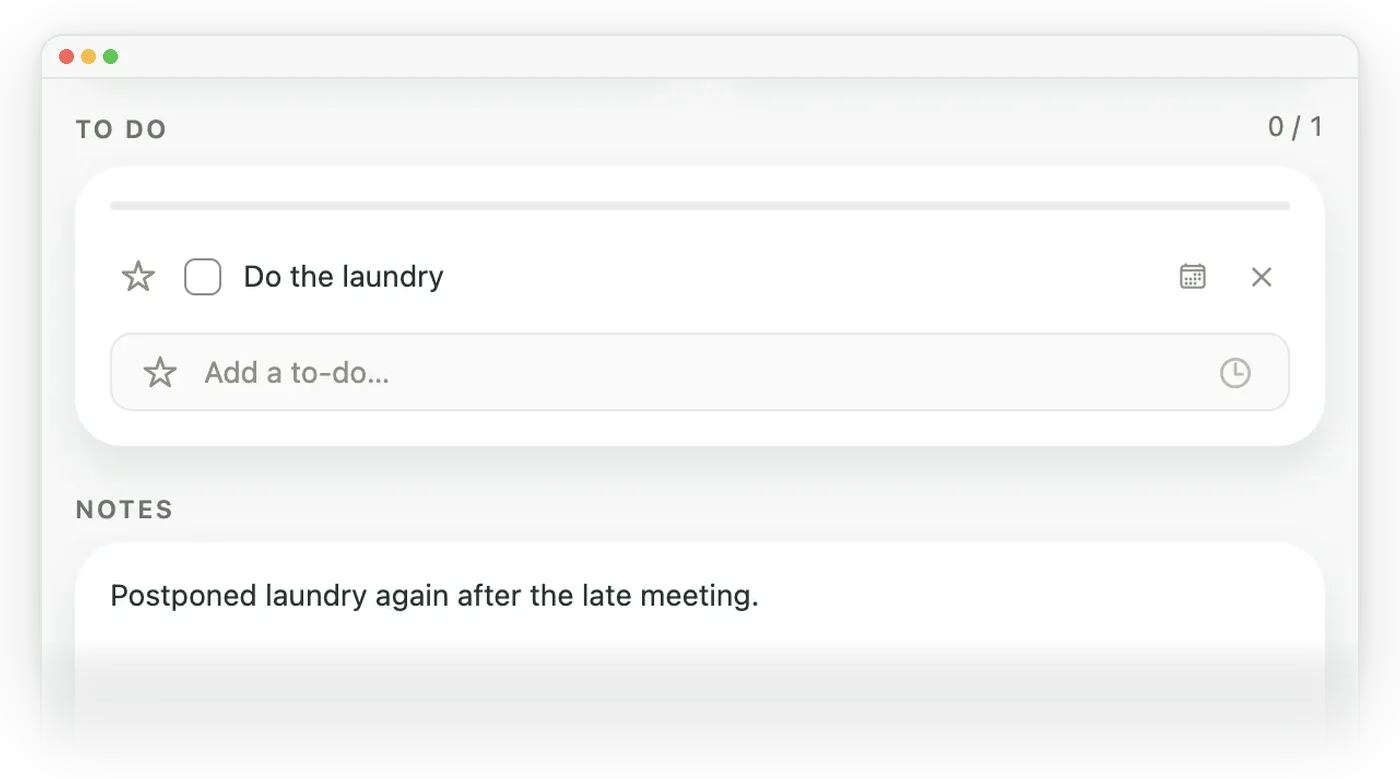
By the end of the day, you’ve returned the form and practised your language. You put the photo order off until Thursday because you still need to choose the prints. You also went to the class and particularly liked a discussion about photographing familiar places.
In Kiyo’s Daily view, you could mark the form as completed, check in for your language habit and leave this note:
Class gave me an idea for photos of our street. Choose the prints before placing the order on Thursday. The walk home was lovely.
The note gives Thursday’s task some context and saves a memory that would be absent from a checklist. Moving the order to Thursday does not, by itself, preserve an explanation of the change. Writing it down is useful when you expect to need it later.
Read each entry for what it actually records
A calendar entry for Tuesday’s class tells you what you arranged. Its presence on a past date does not confirm that you attended. If attendance or the outcome matters, you can add that information yourself.
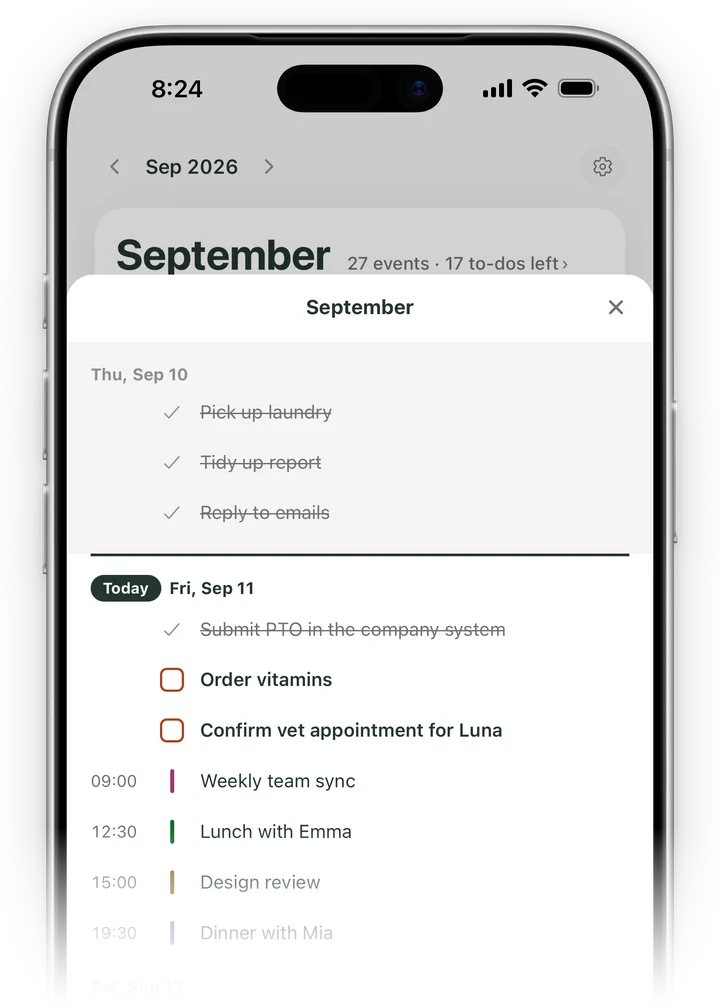
A completed task shows that you marked it finished. A habit check-in is also your own record, rather than an observation made by the app. If a box is empty, you may have missed the activity or forgotten to check it off. The record alone cannot tell you which.
Kiyo brings these different parts of the day together in Daily while preserving their forms. Events retain their dates and times, tasks retain completion information, and habits have their own history. This makes it possible to plan ahead and later read the same day with a different question in mind. The guide to events, to-dos and habits explains how to choose a place for each activity.
Cycle features are optional. You can keep this kind of daily record with them switched off.
Look back for something you want to repeat
When Thursday comes, Tuesday’s note can remind you to choose the prints before placing the order. You can read the reason you left yourself and decide what needs doing first.

There may be something else to keep. Perhaps you liked walking home after the class, and want to leave enough time for that next week. Looking back does not have to become an assessment of how much you accomplished. It can help you make room for something you enjoyed.
You might also find that the week worked well as it was. A note does not have to lead to a new rule. With Kiyo’s approach to everyday planning, you can look back at the plans, recorded completions and notes from a day, then decide what you want to remember.
Let longer writing have its own space
If you want to explore a feeling or tell a story, a diary gives you room to do that. You can use it alongside a planner without copying the whole day’s list into the journal. Keep the detail where you would naturally look for it.
On a day when the existing entries say enough, leave the note empty. If you haven’t written for a while, you can start with today without filling in every missing date.