Period pain at work: what to do with today’s plan
Decide whether working is feasible before choosing what to finish. If it is, choose one specific result to aim for today, leave space around commitments and move the flexible tasks somewhere you can find them again. If working is too difficult, handing over, rescheduling or taking leave are valid decisions, including when a client is expecting you.

Consider a hypothetical Tuesday. It’s 9:15, you have cramps, and your list includes a client call at 10:30, a report due tomorrow at 2pm, and three other jobs: update the team directory, watch a training recording and collect ideas for a future workshop. You had hoped to finish all three today. Nobody needs them today.
Does the client call have to stay?
Keep it only if you can reasonably take part. A fixed appointment tells you when someone expects you; it doesn’t establish that you must attend through severe pain. You can ask a colleague to take over, suggest a different time or arrange leave.
If attending feels manageable, prepare the decisions the call actually needs. You might write down two questions and have the relevant document ready, keeping preparation to those essentials. If you need cover, send the colleague enough context to handle it and tell the client about the change.
Tell them when you are available and what needs handing over. A detailed explanation of your period isn’t required to explain that you’re unwell. If your workplace has a process for reporting absence, use it.
What would make the report easier to pick up tomorrow?
For this Tuesday, allow 25 minutes to put the findings under headings and flag the figures that still need checking. When that period ends, reassess. Twenty-five minutes is a planning choice in this example, not a medical recommendation or an ideal focus interval.
The planned result is a usable outline. It doesn’t include polishing the introduction or checking every reference. If you’re unable to start, or continuing feels too difficult, stop and consider support or leave. If tomorrow’s delivery looks doubtful, contact whoever is waiting for it so you can discuss the deadline or a handover.
Keep tomorrow at 2pm as the report’s real deadline. The time you choose to work on it today is a separate scheduling decision. Giving a task a place in today’s plan doesn’t make today its due date.
Leave a short gap before the call and another afterwards. Those spaces don’t need a collection of small jobs. You can use the next decision point to see whether you’re able to continue.
Where should the three flexible jobs go?
Move them while you’re adjusting the day. Put the team directory on Friday after checking what Friday already holds. Give the training recording a slot next week. The workshop ideas can stay undated in Someday until there’s a reason to choose a day.
Kiyo is a planner with events, to-dos and habits, plus optional estimated cycle context. Daily brings those parts of a day together while keeping their meanings. The client call is an event; the report is a to-do with work you can mark complete. Habits retain their own repetition history.
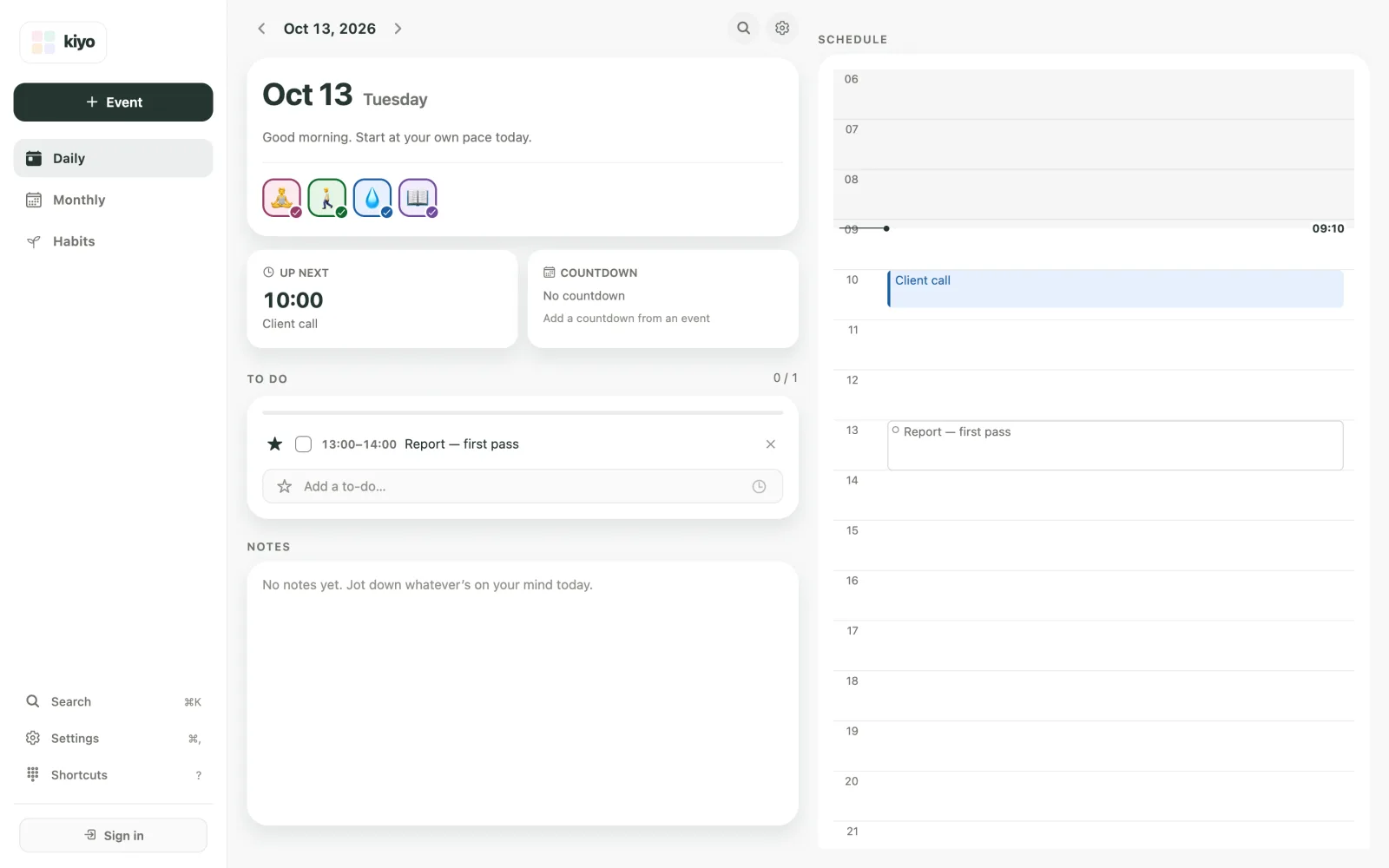
You choose a to-do’s day and working time and move it yourself. Kiyo doesn’t predict your symptoms or rearrange your work. This same-day adjustment doesn’t require cycle setup.
Can you bring work back if you feel better?
Yes, if you feel able and want to. You might check the report’s remaining figures or bring back one postponed task. Leave the rest where you put it unless there’s a reason to change it.

If you still feel unwell, reconsider whether to continue. Before a handover or the end of work, leave a brief note about where the report stands. The directory update and training recording already have somewhere to return to. For items that don’t need a date, see how to keep tasks without due dates.
Pain that stops your usual activities, is new or has changed is a reason to speak with a clinician. Severe or worse-than-usual pain may need urgent assessment. The NHS guidance on period pain explains when to seek help. Changing a work plan doesn’t treat pain.