Should you check your expected period before making plans with others?
It can be useful while you still have a choice of dates, especially when agreeing means booking somewhere or taking time off. An expected period is one consideration alongside everyone else’s availability, budget and preferences. You can look at it and still say yes to exactly the plan you wanted.

There is no need to check before every invitation. If your period rarely changes your preparations, or you prefer to leave it out of planning, that is reasonable too.
Before anyone books the transport
Consider a hypothetical outing: friends are arranging a long coastal hike, with an early train and a return ride that needs booking. They have two possible weekends. One falls near your expected period.
You know from experience that you like to have a little more flexibility on long walks around that time. You could suggest the other weekend while everyone is still comparing dates. Perhaps that works for the whole group. Perhaps one friend cannot get leave then and the train fares are higher. Keeping the first weekend may suit you all better.
You could check the available stops and pack your usual period supplies. Or you might already have everything you need. A phase label cannot tell you whether you can manage a hike, and an estimate cannot tell you how you will feel on the day.
In Kiyo’s Monthly view, estimated cycle timing appears as background colors alongside events. You can look at the hike and the possible dates in the same month before making your choice. See your expected cycle before you say yes: open Monthly and choose cycle setup if you want that context. Cycle features are off by default; turning them on requires separate consent.
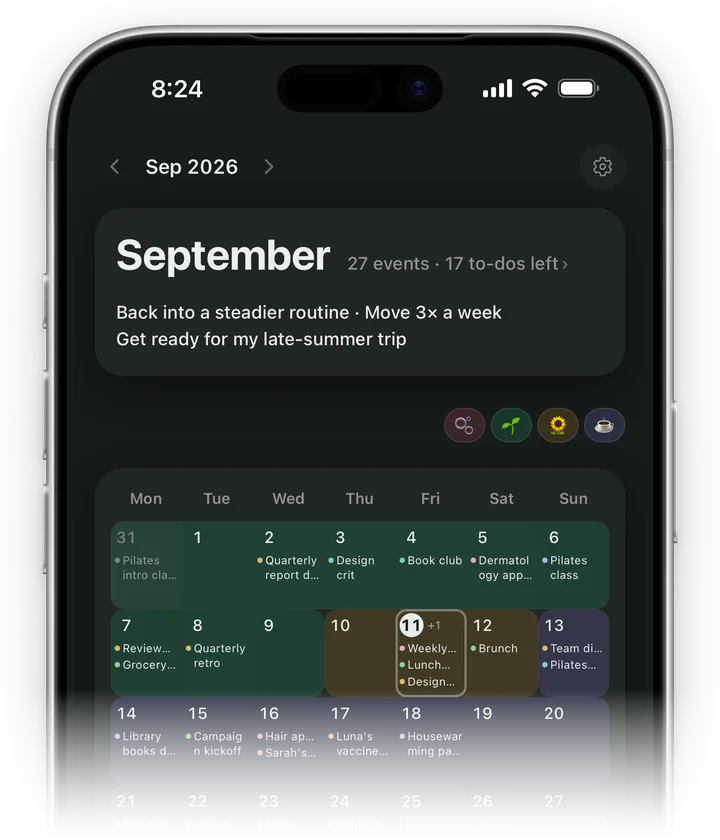
Estimated dates can move. The colors do not predict mood or capability, confirm ovulation, or support fertility or contraception decisions. For more on using uncertain dates, read planning with a period estimate.
Sometimes the date is already settled
A different hypothetical example: a friend is getting married on Saturday, a few hours away. You are sharing a room with another guest and deciding whether to travel Friday evening or Saturday morning. The weekend falls near your expected period.

The wedding date is fixed. Your roommate has a Friday shift, and a second hotel night would stretch the budget. You might keep the Saturday train, pack what you usually use and leave Sunday evening free after getting home. If none of that seems necessary, you can simply make the booking.
This is where other people’s plans matter. A date that looks convenient on your own calendar may cost someone else an extra night away or time they cannot take off. You choose how much weight to give the estimate alongside everyone else’s constraints.
You do not owe anyone an explanation about your cycle to express a date or travel preference. You can discuss what works without sharing menstrual information. Kiyo shows your plans and optional cycle context for your own planning. If the travel needs more thought, planning a trip with your period in mind takes that further.
Look at the day after, too
For a third hypothetical situation, imagine hosting family for a weekend. They have bought their return tickets, and you have promised a Sunday lunch. Your period might arrive then. You want to keep the visit as agreed, but there is also a cupboard clear-out on your Monday list.
You could buy the lunch ingredients earlier and move the cupboard job to another day. In Kiyo’s Daily view, events, to-dos and habits are different items. You can review the following day and manually move a flexible to-do. Kiyo does not rearrange commitments automatically around cycle colors or forecast your energy.
If you feel fine when Monday comes, you can do the cupboard after all. Keeping the whole plan unchanged is equally reasonable.
If the week before your period is what you usually consider, read planning that week. Why a period isn’t a calendar event explains how cycle context sits beside commitments.