Anxious before your period? What to notice before blaming yourself
The timing may be worth noticing. If you’ve felt anxious, low or unlike yourself before your period, you can consider a possible connection without deciding that every feeling was hormonal. Seeing an estimate while you make plans gives you one more piece of context. It cannot tell you what caused a bad day.

Perhaps the hardest part is the explanation you reach for before you notice the dates. You might wonder whether you were too sensitive or should have coped better. Then your period starts, and you wonder whether the days before it deserve another look. You can give them that attention without dismissing what happened during them.
The plan you still want to keep
In this hypothetical example, a reader has an important presentation on Wednesday and has already set aside Tuesday afternoon to prepare. A colleague asks if she can also join an optional planning session immediately beforehand. There is technically room.
Last month, she remembers a stretch of feeling unusually worried about her work. She kept rereading things she had finished and went home convinced she was letting people down. Her period began a few days later. That sequence didn’t establish a diagnosis, but she wants to keep it in mind.
Looking at the coming week with estimated cycle timing beside it, she decides to keep her preparation time clear. She declines the extra session and leaves a gap before starting her slides. The presentation stays exactly where it is. She wants to do it, and a color on a calendar says nothing about her ability to present.
She can reconsider on Tuesday. If she feels fine, the gap is still hers to use. If she looks at the estimate and changes nothing at all, that is a reasonable choice too.
To try this with your own week, open Monthly and see estimated cycle timing beside your plans. Kiyo’s cycle features are off by default. If you want them, optional setup requires separate consent.
When you wonder whether it could be PMS
The American College of Obstetricians and Gynecologists’ PMS guidance describes a recurring pattern of symptoms that can affect normal activities. A difficult few days followed by a period is not enough to determine that you have PMS. Anxiety and depression can also overlap with premenstrual symptoms, which is one reason a clinician may ask about timing and repeated records.

PMS symptoms can occur in the weeks before a period and may include anxiety, irritability, low mood, tiredness and sleep changes. Experiences differ between people and between months. The Office on Women’s Health explains that the causes are not clear; hormone changes may play a role, and sensitivity varies.
That leaves room for everything else happening in your life. An unreasonable workload remains unreasonable. A hurtful conversation still happened. Sleep and stress deserve attention too. You can consider the cycle while asking for a fairer division of work or returning to a disagreement with someone you love.
An estimate where the decision happens
A period record and a calendar often sit in different apps. You might open one when bleeding starts and the other when someone asks about Wednesday. Comparing them requires remembering to check another screen while the invitation is still in front of you.
Kiyo brings optional estimated cycle colors into Monthly, beside the plans you’re considering. It is a personal planner. Events keep agreed dates and times, you mark to-dos complete, and habits have their own check-in history. You make your own adjustments in Daily. Kiyo doesn’t recognize your mood, identify symptoms or rearrange plans according to an energy forecast.
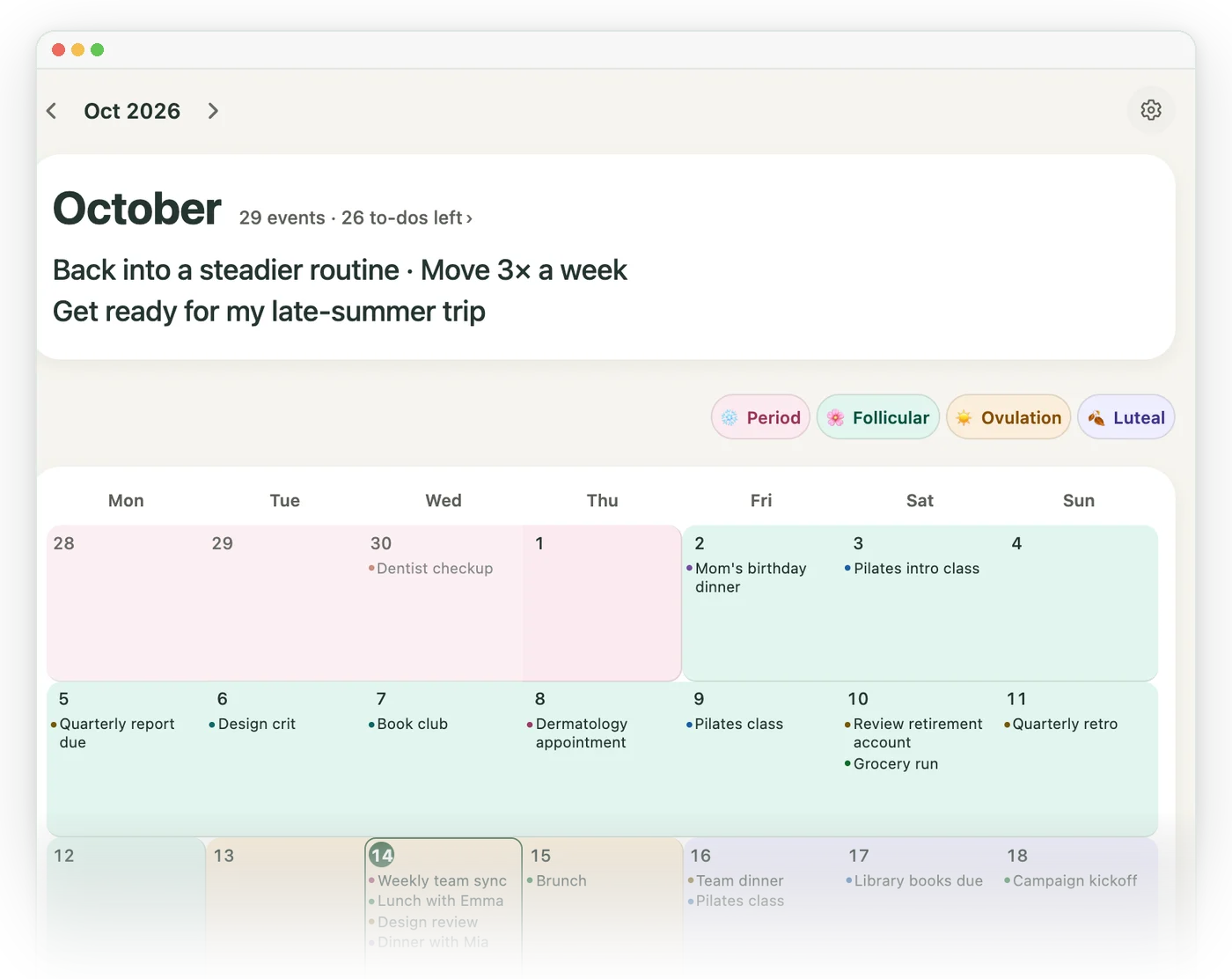
Recorded period dates and future estimates need to stay distinct. The estimate can move, and soft background colors don’t make it certain. They cannot confirm ovulation or guide contraception. In the presentation example, the useful action is a choice about one afternoon, with a fresh look at how the reader actually feels when it arrives.
If anxiety, low mood or other symptoms interfere with daily life, seek help from a clinician. You don’t need to finish collecting records first. The NHS suggests a daily symptom diary over at least two cycles to help with a consultation. Kiyo plans and notes are not a structured medical PMS diary or a diagnostic tool; ask your clinician what records would help.