Why I built Kiyo: my cycle was missing from my planner
I was already a calendar person. I used a planner for work and everyday life. My cycle information lived separately. When I was making plans, I often missed the connection between the two.

That gap is why I decided to build Kiyo, a planner that lets you see your estimated cycle alongside your plans.
I felt heavy and low, and wondered why I was feeling that way, what was wrong. Work felt harder. Producing the same amount took more effort. Later, looking at the calendar, I recognized that it was the premenstrual part of my cycle. I understood the experience as PMS.
That is my recollection and interpretation. It doesn’t explain every difficult day, or mean that every low feeling comes from the menstrual cycle.
Bringing a day together, with room to look back
Bringing information together also meant keeping its different uses clear. Events concern when something happens. To-dos concern getting something done, even when they have dates attached. Habits need a record of practice over time.
Daily brings these together while preserving their different uses. Optional cycle context can be there too. You can see what belongs to the day without making every item into an appointment with a duration.
Keeping those distinctions also makes past records useful. Something written in a plan isn’t necessarily something you finished. A short note can preserve a detail that the schedule alone won’t tell you. To-dos you marked complete and your habit records give you more material to consult when you return to a week.
You can read those records yourself when deciding what to take on next. Perhaps a note helps explain why a week felt crowded. Perhaps you decide you liked the amount you had planned. Kiyo doesn’t automatically identify a cycle pattern or determine what caused an experience. You bring your own understanding to the review.
Having the information somewhere wasn’t enough
The planner was where I made decisions. It showed me what was coming up and where there was space for something else. Checking my cycle meant remembering to look elsewhere, then comparing dates in my head.
I wanted that information available while I was choosing what to take on. By the time I looked back and noticed the timing, the opportunity to consider it when planning had passed.
In a hypothetical example, you are choosing a date for a weekend away. You can see your commitments, and an estimated period date falls near one of the weekends. If that timing is sometimes difficult for you, you might choose the other weekend. You could also keep the date and leave more room around the trip. If the timing doesn’t concern you, the original plan still works.
Seeing the estimate gives you a chance to consider your own experience alongside the practical details. It doesn’t settle the decision.
Why the cycle became a background layer
In Kiyo’s Monthly view, estimated cycle information can appear as background colors. It sits alongside calendar entries without taking an appointment slot or blocking time.
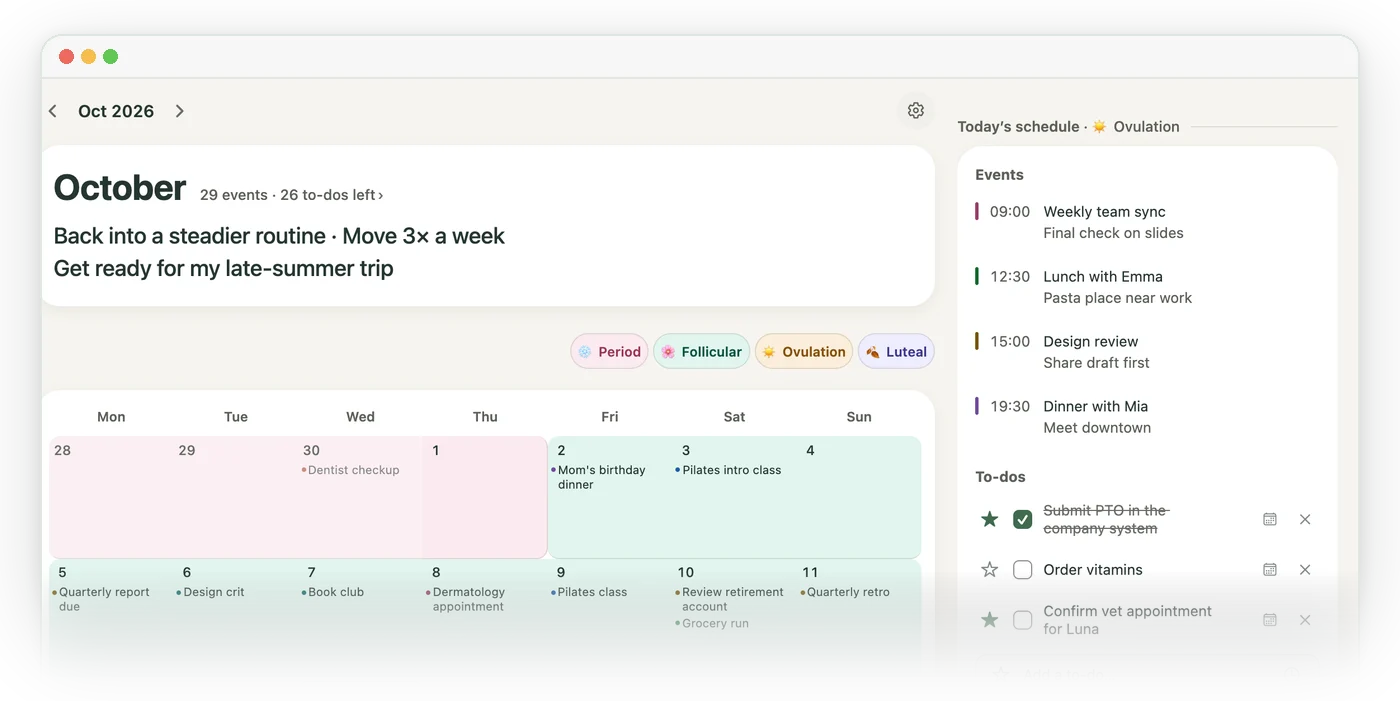
That was a design choice about what the information means. An appointment tells you when something is happening. Your cycle gives you personal context to consider when deciding how to arrange the day. Each needs a different place in the calendar.
An estimate cannot tell you how you will feel when the day arrives. Kiyo doesn’t forecast your energy or assign activities to cycle phases. You can look at the information and keep every commitment you already made.
We explain the display in more detail in our article about showing the cycle on a calendar.
Cycle context is optional
My experience gave Kiyo its starting point. Other people will want different things from their planner, so cycle features are optional. You can use events, to-dos and habits with them switched off.

For those who do want cycle context, I wanted it close at hand when the next commitment is still a choice. That is the connection I was missing in the planner I used.